When you turn on a faucet, flush a toilet, or start your washing machine, you probably don't think about the water pressure behind the scenes. But that pressure plays a major role in how well your plumbing system works—and too much of it can cause serious problems.
One small but important component helps keep that pressure under control: the pressure regulator.
For homeowners and property managers throughout Southern California, understanding what a pressure regulator does, why it matters, and how to recognize when it may be failing can help prevent costly plumbing repairs.
What Is a Pressure Regulator?
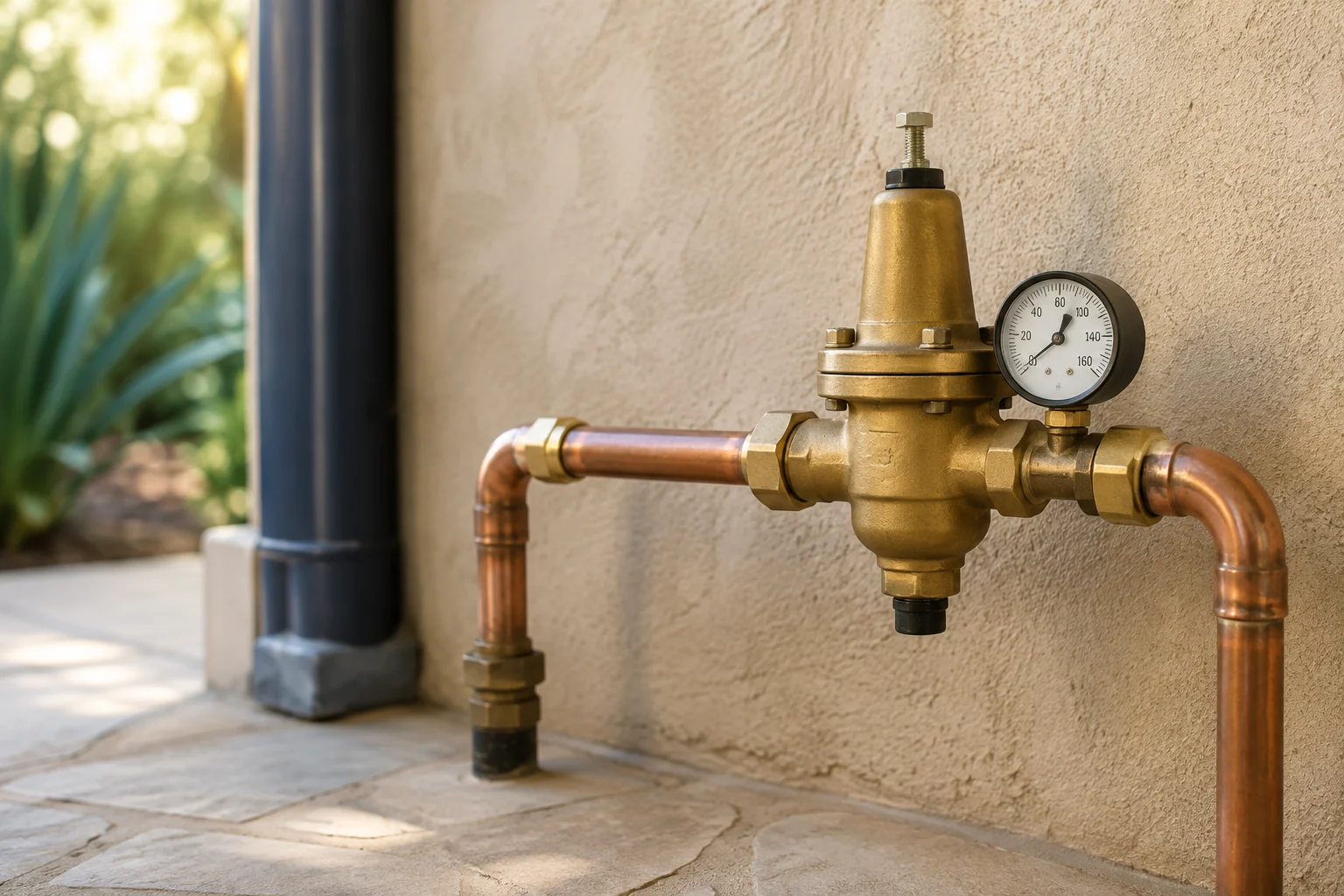
A water pressure regulator, also called a pressure-reducing valve (PRV), is a plumbing device installed on the incoming water service line.
Its job is simple: reduce and control the water pressure entering your property.
Municipal water systems often operate at pressures much higher than what a building's plumbing system is designed to handle. The pressure regulator reduces that incoming pressure to a safer, more manageable level before the water enters the building.
Think of it like a traffic controller for your water supply.
Without it, excessive water pressure can put unnecessary stress on pipes, fixtures, appliances, and water heaters.
Why Are Pressure Regulators Especially Important in Southern California?
Southern California properties can experience significant variations in water pressure depending on the location, elevation, water district, and surrounding infrastructure.
Many communities also have older plumbing systems that were never designed to handle excessive or fluctuating water pressure.
That makes pressure regulation particularly important.
High water pressure doesn't necessarily mean you'll notice a problem immediately. In fact, your plumbing may appear to be working perfectly while excessive pressure is slowly damaging the system.
Over time, excessive pressure can contribute to:
- Leaking faucets and fixtures
- Running or constantly refilling toilets
- Premature failure of water heaters
- Leaking water supply lines
- Damaged appliance connections
- Noisy or vibrating pipes
- Frequent plumbing repairs
- Increased water consumption
- Premature wear on plumbing fixtures
In a commercial property, these problems can become even more disruptive. A failed pressure regulator can affect multiple units, restrooms, fixtures, or sections of a property.
What Happens When a Pressure Regulator Starts to Fail?
Pressure regulators don't last forever.
Like many mechanical plumbing components, they can wear out over time. Internal parts can become worn, restricted, or damaged, preventing the regulator from properly controlling incoming water pressure.
One of the biggest clues is a noticeable change in water pressure.
You might notice that:
- Water pressure suddenly seems much stronger than normal.
- Water pressure drops when multiple fixtures are being used.
- Faucets or toilets begin leaking unexpectedly.
- Pipes make banging, rattling, or knocking noises.
- The pressure fluctuates throughout the day.
- Fixtures or appliances begin failing more frequently.
Sometimes, however, there may be no obvious warning.
That's why testing your property's water pressure and inspecting the regulator can be an important part of preventative plumbing maintenance.
How Do You Know If Your Water Pressure Is Too High?
A pressure gauge can be used to measure the water pressure entering a property.
For many residential plumbing systems, water pressure around 40–60 PSI is generally considered a comfortable operating range, although the appropriate pressure can vary depending on the property's plumbing system and local requirements.
Consistently high pressure can place unnecessary stress on your plumbing.
And here's something many property owners don't realize:
Water pressure can change even when you aren't using more water.
Changes in municipal system demand, elevation, and other factors can cause pressure to fluctuate.
That's why a pressure regulator isn't simply about reducing pressure once. It is designed to help maintain controlled pressure as conditions change.
Pressure Regulators and Water Conservation
A properly functioning pressure regulator can also play a role in water conservation.
Excessive pressure can cause fixtures to use more water than necessary and can make small leaks more significant.
For properties with multiple buildings, units, or commercial fixtures, even a small amount of unnecessary water usage can add up.
Maintaining proper water pressure can help protect your plumbing system while supporting more efficient water use.
Don't Forget About Maintenance
One of the easiest ways to overlook a pressure regulator is because it isn't something most people interact with every day.
It's usually tucked away near the property's main water service, quietly doing its job.
But that doesn't mean it should be ignored.
For larger properties, property managers can benefit from including pressure regulators in a preventative maintenance program. Periodic testing can help identify regulators that aren't maintaining proper pressure before they contribute to leaks, fixture failures, or more expensive plumbing problems.
For properties with multiple pressure regulators, testing each regulator can provide valuable information about the condition of the plumbing system.
What Should Property Managers Look For?
If you manage an HOA, apartment community, mobile home park, commercial center, or other multi-unit property, pressure regulation deserves a place on your maintenance checklist.
Consider having your plumbing professional evaluate:
- Incoming water pressure
- Pressure regulator performance
- Pressure fluctuations
- Leaking or damaged regulators
- Older regulators that may be nearing the end of their service life
- Water pressure at different areas of the property
Keeping track of these measurements over time can also help identify changes before they turn into emergency plumbing calls.
A Small Component Can Prevent a Big Problem
Your pressure regulator may not be the most noticeable component of your plumbing system, but it has an important job.
It helps protect your pipes, fixtures, appliances, and water heaters from excessive water pressure—essentially acting as a protective barrier between the municipal water supply and your property's plumbing system.
For Southern California homeowners and property managers, proactive pressure regulator testing and maintenance can be a smart way to protect the plumbing system and avoid preventable repairs.
Is Your Property's Water Pressure Under Control?
If you're experiencing unusually high or fluctuating water pressure, recurring plumbing leaks, or frequent fixture problems, your pressure regulator may be worth checking.
Rossman Plumbing can help inspect, test, and evaluate pressure regulators for residential and commercial properties throughout Southern California.
Don't wait for a small pressure problem to become a major plumbing repair.
Rossman Plumbing—Experts You Can Trust for Over 25 Years
From routine maintenance to emergency plumbing repairs, Rossman Plumbing is here to help keep your plumbing system working properly.
Contact Rossman Plumbing today to schedule a pressure regulator inspection or ask about our preventative maintenance services.
Call us 24/7 at (855) 467-6776 or contact us online to schedule service or request a quote.
Rossman Plumbing | 24/7 Emergency Service | Serving Southern California